Peony Baby Cow Calf Laser Tumbler Wrap Review
When I first opened the file for the Peony Baby Cow Calf Laser Tumbler Wrap, my initial thought wasn't about the technical specs, but rather the specific mood it evokes. It is a design that demands attention to detail and a clear understanding of where it fits in the chaotic world of handmade goods. As someone who has reviewed countless digital assets for small business owners and Etsy sellers, I approach this piece not just as a graphic, but as a potential cornerstone for a finished product line.
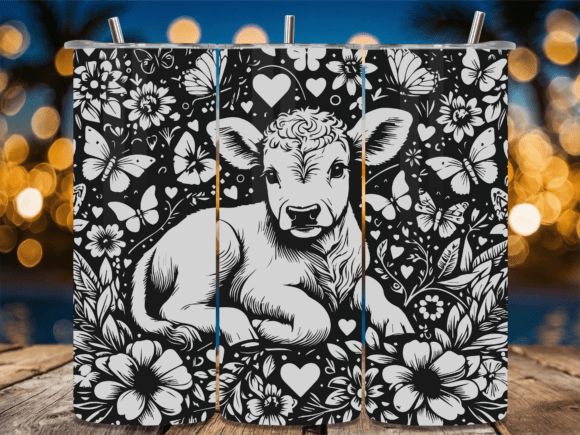
The name itself suggests a whimsical juxtaposition: the delicate nature of peonies meeting the rustic charm of a baby cow. This combination creates a unique visual personality that feels perfectly suited for nursery decor, baby shower gifts, or perhaps a boutique brand focused on farm-to-table aesthetics. However, before we dive into how this looks on a finished item, we have to address the elephant in the room regarding its intended application.
Understanding the Medium: A Critical Distinction
It is crucial to clarify immediately that while this review comes from an embroidery designer's perspective, the product description explicitly states this is an Engraving Laser Tumbler Wrap. The text notes it is "thoughtfully designed for Stanley-style tumblers" and delivers "sharp engraving results." This means the primary use case is laser engraving on metal or coated surfaces, not machine embroidery stitching.
However, many creative entrepreneurs are looking for versatile design assets. If you are a digital product seller or a craft business owner wondering if this Peony Baby Cow Calf Laser Tumbler Wrap can be adapted for textile work, the answer requires careful consideration. The design likely relies on high-contrast lines and solid fills typical of vector graphics used for lasers. Translating this directly into a machine embroidery design without modification could result in a mess of thread density issues.
If you intend to use this as a source image to create an embroidery file, you must treat it as a template. You would need to convert the visual elements into satin stitch for outlines and fill stitch for the cow and flower shapes. The seamless wrap aspect mentioned in the product details is fantastic for laser projects, ensuring no gaps appear on a curved tumbler. For embroidery, that same seamless concept would need to be broken down into a layout that fits within standard hoop sizes, like 4x4 or 5x7 inches.
Real-World Application: The Custom Gift Scenario
Let's imagine a real-life scenario. You are preparing for a holiday season rush. Your goal is to create a set of personalized gifts for a local boutique client. They want something cute for their new parents' section. You decide to take inspiration from the Peony Baby Cow Calf Laser Tumbler Wrap theme to create a custom embroidered tote bag and a matching sweatshirt.
In this context, the design's strength lies in its subject matter. The baby cow and peony motif is universally appealing. On a soft cotton tote bag, using a light cream background with dark brown and pink threads, the imagery would pop. The "baby" element adds a layer of emotional connection that customers love when shopping for personalized gifts. It feels thoughtful and curated, which boosts customer trust and perceived value.
However, the transition from a flat laser wrap to a stitched textile introduces challenges. A laser wrap covers a full cylinder; an embroidery hoop is rigid. To make this work on a tote bag, you would likely need to digitize the central portion of the wrap—the cow's face and the surrounding peonies—into a compact arrangement. If you try to stitch the entire "wrap" design onto a flat surface, the scale might become distorted, making the cow look too large or the flowers too sparse.
Technical Performance and Fabric Considerations
For those who manage to adapt this design for custom apparel or baby clothes, the choice of fabric is paramount. The design features detailed floral elements (peonies) and organic shapes (the calf). These details thrive on stable, woven fabrics like canvas for tote bags or dense fleece for sweatshirts. The stitch density required to capture the texture of the cow's fur and the petals of the peony will be moderate to high.
If you attempt to stitch this on stretchy fabrics, such as a jersey knit hoodie, you risk distortion unless you use a heavy-duty cut-away stabilizer. The curves of the design might pull the fabric, causing the final product to look puckered. Similarly, on textured fabrics like a rough linen tea towel, the fine details of the laser file might get lost under the weave of the cloth. In these cases, a simpler version of the design with fewer intricate lines would yield a cleaner finished product.
I also need to highlight the issue of color contrast. The original laser file likely uses black lines on a white background for maximum clarity during engraving. When translating this to thread colors, you cannot simply assume the same contrast will hold up. Dark thread on dark fabric will vanish, and light thread on light fabric will disappear. You must carefully select your thread colors to ensure the cow stands out against the background, perhaps opting for a deep navy or charcoal for the cow against a pastel yellow or sage green background.
Where to Exercise Caution
There are specific scenarios where adapting the Peony Baby Cow Calf Laser Tumbler Wrap for embroidery requires extreme caution. Small hoop sizes, such as 3x3 inches, are generally unsuitable for a design that aims to be a "full-wrap" or feature significant detail. Trying to cram a complex scene into a tiny space often leads to a loss of definition, turning a charming cow into a blurry blob.
Additionally, if you are planning to sell embroidered patches based on this design, be aware of the edge finish. Laser files often have sharp, clean edges that do not translate well to the satin stitch borders used in patch making. You may need to add a border or adjust the outline width to prevent fraying and ensure the patch holds its shape after washing.
Another area to watch is the durability of the design. Embroidery on items that require frequent washing, like kitchen towels or aprons, needs robust stitching. If the original design relies on thin, delicate lines that might not survive a wash cycle in a commercial embroidery machine, you will need to thicken those lines during the digitizing process. This is particularly important for commercial embroidery projects where returns due to poor quality can damage your reputation.
Practical Designer Notes for Success
Before you commit to producing a batch of products featuring this theme, here is a checklist of practical steps to ensure success:
- Test on Scrap First: Always run a test stitch on scrap fabric that matches your final material. Check for puckering, thread breaks, and color accuracy.
- Review Stitch Density: Ensure the digitized version doesn't have overly dense areas that could cause needle deflection or fabric distortion.
- Confirm Hoop Size: Verify that the design dimensions fit comfortably within your machine's maximum hoop size with adequate margin.
- Inspect Small Details: Zoom in on the digital preview to see if the tiny details of the peony petals or the cow's eyes are legible at the intended size.
- Check Licensing: Crucially, confirm whether the license allows for commercial use of the finished product. Many digital assets restrict selling items made from them, especially if the file itself is sold as a standalone asset.
- Use Proper Stabilizer: Match the stabilizer weight to the fabric. Heavyweight tear-away or cut-away is usually best for maintaining the integrity of detailed designs.
Final Thoughts on Visual Appeal
The Peony Baby Cow Calf Laser Tumbler Wrap offers a delightful aesthetic that resonates well with current trends in home decor and baby products. Its ability to convey warmth and playfulness makes it a strong candidate for holiday embroidery collections or wedding gifts for couples who love animals. While it was originally crafted for laser engraving, the underlying artistry is adaptable for the right creator willing to invest time in proper digitization.
For the savvy Etsy seller or small shop product creator, this design provides a unique angle to differentiate your offerings. By taking the concept and executing it with high-quality embroidery project techniques, you can create items that feel bespoke and professional. Whether you end up using it for a tote bag design, a sweatshirt embroidery piece, or a custom pillow cover, the key is to respect the medium. Treat the laser file as inspiration, adapt it for the needle, and focus on the tactile experience of the handmade product.
In the end, the value of this design lies not just in the image itself, but in how you bring it to life. With the right preparation and attention to detail, the Peony Baby Cow Calf theme can become a signature element of your brand, driving engagement and recognition among buyers who appreciate the charm of nature and animals combined.